

Choosing the Right Car Insurance Matters
This is what every driver needs to know. First of all, understand that “Full Coverage” doesn’t always mean fully covered after a crash.
The Insurance Puzzle

Are you thinking about buying a motorcycle or auto insurance or questioning the adequacy of your current policy?
Navigating the maze of insurance options can be as confusing as deciding on a menu when you’re already full. Unlike appetizers, however, the type of coverage you choose can significantly impact your financial security and peace of mind. The good news is we’ve got your back. If you’re looking for clarity, you’ve come to the right place. Let’s break down the essentials of vehicle insurance coverage to ensure you’re fully prepared and protected.
Expert Insights on Insurance Needs
Our team at The Biker Lawyers has over four decades of personal injury experience. Our daily encounters with insurance companies have equipped us with unique insights into the types of insurance that best serve our clients’ needs.
Navigating Liability Coverage
Liability coverage is typically the first you’ll encounter while shopping for insurance. It’s essential for covering injuries you might cause to others in an accident when you’re at fault. It’s crucial to note that liability coverage doesn’t protect you if you’re hit by another driver; it’s about protecting your finances from claims made by others.
In Iowa, for instance, the law mandates carrying at least $20,000/$40,000 in liability coverage. This means up to $20,000 for an individual and a total of $40,000 per accident.
The Importance of UM/UIM Coverage
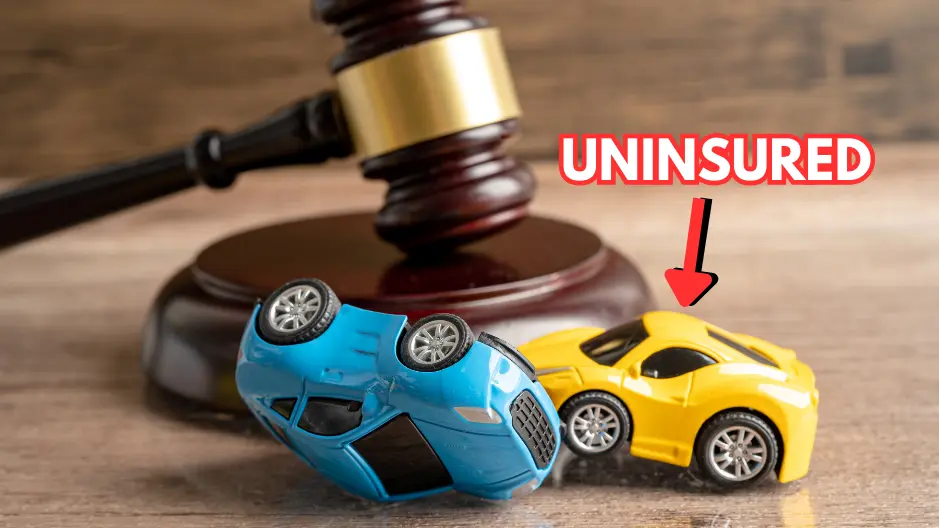
Uninsured and Underinsured Motorist (UM/UIM) coverage becomes critical when an at-fault driver lacks sufficient insurance to cover your damages.
For example, imagine a teenager runs a red light and crashes into you, resulting in significant damages and losses that their minimum liability coverage can’t fully compensate for. Here, a UM/UIM policy with high limits ($250,000 per person, $500,000 per crash) could cover the shortfall, ensuring you’re not left financially vulnerable.
Exploring Additional Coverage Options
Beyond liability and UM/UIM, several other coverage options can tailor your insurance to your needs. These include…
Medical Payments Coverage
 Medical Payments Coverage covers medical costs for you and your passengers, irrespective of fault. This can be particularly valuable if you frequently have passengers who might not have their own health insurance.
Comprehensive and Collision
 Comprehensive & Collision coverage are often required if you’re leasing or financing a vehicle. Comprehensive covers events like theft, vandalism, and natural disasters, while Collision covers damages from accidents.
Property Damage
Property Damage coverage ensures you can cover costs if you damage someone else’s property in an accident.
Emergency Road Service and Rental Reimbursement
 These can offer peace of mind for unexpected situations, like needing a tow or a rental car after an accident.
GAP Insurance

GAP Insurance is essential if you owe more on your car loan than its current market value, particularly in the event of total loss or theft.
Choosing the Right Coverage for You
Choosing the right insurance coverage isn’t just about complying with legal requirements; it’s about ensuring a safety net that matches your lifestyle and risk profile.
We recommend carrying substantial liability and UM/UIM coverage—at least $250,000/$500,000. This level of coverage helps protect against severe financial distress should the worst happen.
The Highest Level of Protection
The $250,000/$500,000 limits we recommend will cover the losses from most crashes. There are some crashes, however, where even these limits aren’t enough. This is where umbrella insurance comes in.
Umbrella Insurance
Umbrella insurance only kicks in if your losses are greater than the $250,000/$500,000 policy limits. Umbrella insurance is very inexpensive, and is an additional level of protection that will protect you if you’re involved in a terrible crash. It is crucial in buying umbrella insurance that you very specifically tell you agent that you want your umbrella policy to include uninsured and underinsured coverage. This way, if the driver that injures you is uninsured or doesn’t have enough insurance, you are able to recover your losses fully, or at least to a much greater extent.
It sounds like a lot of coverage, but if you get umbrella insurance, we recommend that it be for at least $1 million. In pricing this insurance, you’ll find that it is surprisingly cheap, and that you can afford an umbrella policy of $2M or even $5M.
Most Common Car Insurance Coverage FAQ
Click the (+) on any of the questions below.
What car insurance coverage is required in Iowa?
Iowa drivers are required to carry liability coverage. The minimum required coverage is $20,000 for bodily injury or death of one person, $40,000 for bodily injury or death of two or more people in one accident, and $15,000 for property damage.
That may keep you legal, but it does not always mean you are well protected. A serious crash can blow past minimum limits fast.
Is Iowa minimum car insurance enough?
For many drivers, no. Minimum coverage may satisfy Iowa law, but it may not be enough to protect your finances after a serious crash.
If you cause a crash and the damages are higher than your policy limits, you could be personally responsible for the difference. If another driver hits you and only carries minimum coverage, their insurance may not be enough to cover your injuries, lost wages, and other losses.
That is why higher liability limits and strong UM/UIM coverage are worth talking about with your insurance agent.
What does liability insurance cover?
Liability insurance helps pay for injuries or property damage you cause to someone else if you are at fault for a crash.
It does not pay for your own injuries. It does not fix your own vehicle. It protects other people from damages you cause, and it protects you from being personally exposed to those claims up to your policy limits.
What is uninsured motorist coverage?
Uninsured motorist coverage, often called UM coverage, can help protect you if you are hit by a driver who does not have insurance.
This matters because not every driver on the road follows the law. If an uninsured driver causes a crash, your own UM coverage may be one of the most important protections you have.
What is underinsured motorist coverage?
Underinsured motorist coverage, often called UIM coverage, applies when the at-fault driver has insurance, but not enough to cover the damage they caused.
For example, if a driver with minimum limits causes a serious crash, their insurance may run out quickly. UIM coverage can help cover the gap, depending on your policy and the facts of the claim.
Do I need UM/UIM coverage if I already have health insurance?
Yes, UM/UIM coverage can still be very important.
Health insurance may help with medical bills, but it does not usually cover everything an injury claim may involve. UM/UIM coverage may help with losses such as pain, suffering, lost wages, loss of future earning ability, and other damages tied to the crash.
Health insurance and auto insurance do different jobs. One does not automatically replace the other.
What is medical payments coverage?
Medical payments coverage, often called MedPay, can help pay medical bills for you or your passengers after a crash, no matter who was at fault.
This can be helpful early on, especially before liability is sorted out or before a personal injury claim is resolved. The amount available depends on the limits you bought.
What is the difference between comprehensive and collision coverage?
Collision coverage helps pay for damage to your vehicle after a crash, whether you hit another vehicle, an object, or your vehicle rolls over.
Comprehensive coverage is for certain non-collision losses, such as theft, vandalism, fire, hail, storm damage, or hitting an animal.
If you have a loan or lease, your lender may require both. If you own your vehicle outright, you may still want them depending on the value of the vehicle and your ability to replace it.
What does “full coverage” car insurance actually mean?
“Full coverage” is not one single type of insurance. It usually means a policy includes liability, comprehensive, and collision coverage.
But a “full coverage” policy can still leave major gaps. It may have low liability limits. It may have weak UM/UIM coverage. It may not include rental reimbursement, GAP insurance, or an umbrella policy.
The better question is not “Do I have full coverage?” The better question is “What exactly does my policy cover, and what are the limits?”
What is GAP insurance?
GAP insurance can help if your vehicle is totaled and you owe more on the loan than the vehicle is worth.
For example, if your car is worth $18,000 but you still owe $23,000, regular insurance may only pay the actual value of the car. GAP coverage may help cover the remaining loan balance, depending on the policy.
This can be especially important for newer vehicles, long-term loans, or vehicles that depreciate quickly.