
NEED HELP?
How to Recover Compensation From Your Own Insurance Company After an Accident
UPDATED: July, 2026 at 10:30 AM by The Biker Lawyers
It’s not always the other insurance company that tries to stiff you.

You paid the premiums. You kept the policy active. You expected your insurance company to be there when something went wrong.
Then the crash happened, and you learned something most people do not expect: Even your own insurance company may question the claim, limit what it will pay, ask for more proof, or argue that part of the loss is not covered.
That does not always mean the insurance company is doing something wrong. Insurance claims can involve legitimate questions about coverage, fault, medical treatment, vehicle damage, policy limits, and what caused the loss.
It does mean you should take the claim seriously from the beginning.
As one former client put it:
“We were going on blind faith that the insurance companies would do what was right.”
Blind faith is not a claim strategy.
Recovering compensation from your insurance company starts with understanding what coverage you purchased, following the requirements of the policy, preserving evidence, documenting your losses, and being careful about what you sign or say while the claim is being investigated.
What Is a First-Party Insurance Claim?
A first-party claim is a claim you make under your own insurance policy.
A third-party claim is usually made against someone else’s insurance company, such as the insurer for a driver who caused the crash.
After a serious motorcycle or car accident, both types of claims may be involved.
You may pursue the at-fault driver’s liability insurance while also making claims under your own policy. Depending on the coverage you purchased, your insurance could help with medical bills, vehicle damage, towing, rental expenses, or injuries caused by an uninsured or underinsured driver.
The fact that another driver caused the crash does not always mean you should ignore your own policy. Your coverage may help while the other insurer investigates fault. It may also become extremely important when the responsible driver has no insurance or not enough insurance to cover the harm caused.
Quick Answer: What Should You Do If Your Insurance Company Won’t Pay?
If your insurance company will not pay after an accident, ask for the reason in writing, review your policy and declarations page, save every document, keep a claim communication log, continue medical treatment, gather proof of your injuries and losses, and NEVER sign a release before you speak with a personal injury lawyer.
If the claim involves serious injuries, a motorcycle crash, uninsured motorist coverage, underinsured motorist coverage, MedPay, policy limits, or a disputed fault argument, the situation may be more complicated than it looks.
Do not let the insurance company define your claim before you understand your rights.
Start With Your Declarations Page and Full Policy
Most people do not read their full insurance policy until something goes wrong.
That is understandable. Insurance policies are long, technical, and rarely written like something a normal person would choose to read.
Start with the declarations page, sometimes called the “dec page.” It usually identifies the covered drivers and vehicles, policy dates, types of coverage, limits, deductibles, and endorsements.
The declarations page is only the starting point. The full policy contains the definitions, exclusions, duties after a crash, notice requirements, cooperation provisions, and other terms that may affect your claim.
Do not assume the words “full coverage” mean every possible loss is covered. Full coverage is not one specific kind of insurance. It is usually a loose term for several separate coverages, each with its own limits, deductibles, conditions, and exclusions.
What your insurance company may owe depends on the coverage you purchased and the facts of the accident.
Understand Which Coverages May Apply

Several parts of your policy may come into play after a crash.
Medical payments coverage, often called MedPay, may help pay medical expenses for you and a passenger regardless of who caused the accident. The amount available depends on the limit you purchased and the terms of the policy.
Collision coverage may pay for damage to your motorcycle or other insured vehicle, subject to the deductible and the insurer’s valuation of the loss. You may be able to use collision coverage even when someone else caused the crash. Your insurer may then try to recover what it paid from the responsible driver or insurance company.
This can be useful when the other insurer is taking too long, fault is disputed, or the responsible driver has no insurance.
Comprehensive coverage generally applies to certain losses that do not result from a collision. Depending on the policy, it may cover theft, fire, vandalism, hail, falling objects, or contact with an animal.
Uninsured motorist coverage may apply when the person who caused the crash has no liability insurance. It may also become important in certain hit-and-run cases.
Underinsured motorist coverage may apply when the at-fault driver has insurance, but the policy limits are not high enough to cover the injuries and losses caused by the crash.
That matters because a serious motorcycle accident can quickly produce medical bills, lost income, permanent limitations, scarring, long-term treatment, and other losses that far exceed another driver’s liability limits.
Do not settle with the at-fault driver or sign a liability release before checking your own policy. Your uninsured or underinsured motorist coverage likely includes notice, consent-to-settle, subrogation, or other requirements that need to be handled correctly.
Pull Your Declarations Page and Policy

Most people do not read their insurance policy until something goes wrong. That’s normal. Insurance policies are not exactly beach reading.
But after a crash, the policy matters. The declarations page usually shows the types and amounts of coverage. The full policy explains limits, exclusions, conditions, notice rules, duties after a crash, and what the insurance company may or may not owe.
If you were in a serious crash, look for coverage such as liability, collision, comprehensive, MedPay, uninsured motorist coverage, underinsured motorist coverage, rental reimbursement, towing, roadside assistance, and any umbrella policy.
For motorcyclists, also check whether the policy covers custom parts, accessories, riding gear, passengers, and every bike you ride.
Do not assume you have coverage just because someone once told you that you had “full coverage.” Full coverage is not one magic thing. It is a bundle of separate coverages, and each one has limits.

The Iowa Insurance Division also recommends reviewing your declarations page and policy exclusions so you understand what coverage you actually have.
Report the Claim Promptly
Tell your insurance company about the crash as soon as reasonably possible.
Provide the basic facts, including when and where the collision happened, which vehicles were involved, whether police responded, whether anyone was hurt, and where the motorcycle or vehicle was taken.
Stick to what you know.
Do not guess about speed, distance, fault, injuries, or what another driver was thinking. It is fair to say you do not know something or that the crash is still being investigated.
You may not know the full extent of your injuries right away. Adrenaline, shock, medication, and pain can affect what you notice or remember after a serious accident.
Reporting the claim does not require you to have every answer on the first day.
## Cooperate Without Giving Away More Than Necessary
Your policy may require you to cooperate with your insurance company’s investigation.
That could mean providing photographs, allowing the vehicle to be inspected, supplying repair estimates or medical records, completing claim forms, answering reasonable questions, or attending a medical examination under certain circumstances.
Ignoring legitimate policy requirements can create avoidable problems.
At the same time, cooperation does not mean signing every document without reading it. It also does not mean answering questions you do not understand or guessing when you do not know the answer.
Before signing a medical authorization, proof-of-loss form, settlement agreement, release, or other binding document, make sure you understand what information it gives the company, which claim it applies to, and whether it closes part or all of the case.
A serious injury claim is not the place for guesswork.
Be Careful With Recorded Statements
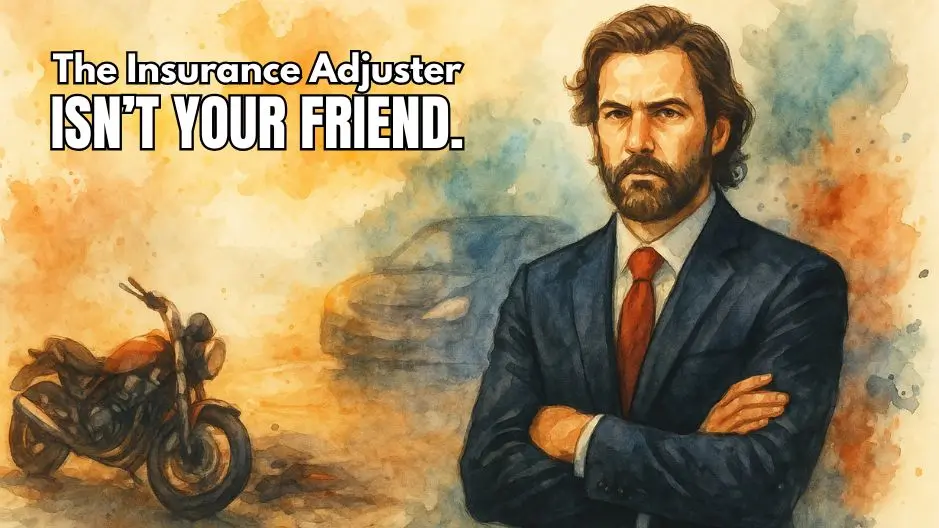
Your insurer may ask you to give a recorded statement.
Sometimes the policy requires reasonable cooperation. That does not mean you should walk into a recorded interview unprepared.
Early statements can create problems because they often happen before you have seen the crash report, spoken with witnesses, received a complete diagnosis, or understood which insurance coverages may apply.
You may also be dealing with pain, medication, stress, or incomplete memories.
An adjuster may later compare your statement with medical records, photographs, police reports, witness accounts, vehicle data, or later testimony.
Tell the truth. Do not exaggerate. Do not fill gaps in your memory by guessing.

When the crash caused serious injuries, fault is disputed, or the insurance company has already started questioning the claim, talk with a lawyer before giving a recorded statement.
Watch Out for Broad Medical Authorizations

The insurance company may need medical records that relate to the accident.
That does not necessarily mean it needs permission to review your entire medical history.
A broad medical authorization could allow the insurer to search for old injuries, previous accidents, unrelated diagnoses, prior pain complaints, or other records it may try to use against you.
A previous injury does not destroy a new claim. A crash can aggravate an older condition or make a manageable problem much worse.
The real question is often not whether you ever experienced pain before. It is what the crash changed.
Before signing a medical authorization, find out which records are being requested, what dates are involved, which providers will receive the request, and why the records are needed.
Document the Full Effect of the Crash

A claim should show more than the cost of the first emergency room visit.
Keep the medical bills and records, but also document how the injuries affect your work, daily activities, sleep, mobility, independence, family responsibilities, and ability to enjoy life.
Save photographs of your injuries as they heal. Keep work restrictions, pay records, mileage to appointments, prescription receipts, therapy records, repair estimates, towing bills, storage charges, and communications with medical providers or insurance companies.
If you were riding a motorcycle, keep the damaged helmet, jacket, boots, gloves, and other riding gear. Save receipts for custom motorcycle parts and accessories when available.
Medical documentation is especially important.
If your symptoms change or get worse, tell your medical provider. If you cannot work, sleep, walk, lift, ride, or take care of ordinary responsibilities the way you did before, make sure that information is accurately reflected in your medical records.
Those records help connect the crash to the injury and show how recovery develops over time.
Keep Track of Every Insurance Conversation

Insurance claims can last for weeks, months, or longer. Do not rely on memory.
Keep a simple record of when you spoke with the insurance company, who you spoke with, what was discussed, what documents were requested, what you provided, and what the adjuster said would happen next.
Save emails, letters, text messages, voicemails, estimates, claim forms, and upload confirmations.
When something important is discussed by phone, consider sending a short follow-up email confirming the conversation.
For example:
“This email confirms our conversation today. You stated that the company needs the repair estimate and emergency room records before reviewing the claim. I will provide those documents by Friday.”
A simple email can prevent a later disagreement about what was said or promised.
Do Not Settle Before You Understand the Damage

A Low Settlement Offer Is Not the Same as Fair Compensation
A quick payment may sound good when bills are piling up and you are missing work.
The problem is that early settlement offers often arrive before anyone knows how the injury will turn out.
You may not yet know whether surgery will be needed, how long treatment will last, whether you can return to the same job, whether the injury will become permanent, or whether future medical care will be required.
You may not even know whether another insurance policy applies.
Once you sign a full release, the claim is over.
You cannot reopen it later because your symptoms became worse, a doctor recommended surgery, or the settlement money ran out.
Before accepting a final settlement, make sure you understand what is being released and whether the payment accounts for the full effect of the crash.
Ask for Important Insurance Decisions in Writing
When an adjuster says the company will not pay, will only pay part of the claim, or needs more time, ask for a written explanation.
The response should identify what part of the claim is disputed, why the decision was made, what policy language the company is relying on, and whether additional information is needed.
You should also ask whether the decision is final and whether the policy provides an appeal, review, appraisal, or other dispute process.
A vague phone explanation is difficult to challenge.
A written position gives you something specific to review.
What Iowa Claim-Handling Rules Require
Iowa has rules governing how property and casualty insurers handle claims.
Among other requirements, insurers generally must acknowledge claims and respond to communications within certain timeframes. They are also expected to provide necessary claim forms and reasonable assistance so policyholders can comply with policy conditions.
When a written first-party property claim is denied, the insurer generally must identify the policy provision, condition, or exclusion being used as the basis for the decision.
These rules do not mean every serious injury claim must be completed within a few days or weeks. Injury claims often cannot be fairly valued until the medical condition, treatment, and future needs are better understood.
They do mean an insurance company should not simply ignore a claim or leave the policyholder guessing indefinitely.
What If the Insurance Company Delays, Denies, or Underpays the Claim?
Not every delay or disagreement is insurance bad faith.
An insurer may have a legitimate reason to investigate whether the policy was active, whether the vehicle was covered, how the crash happened, whether another driver was uninsured, whether the medical treatment relates to the accident, or whether an exclusion applies.
The situation becomes more concerning when the company refuses to conduct a reasonable investigation, misrepresents the coverage, ignores important evidence, keeps changing its explanation, or denies a valid claim without a reasonable basis.
If your claim has already been denied, seriously delayed, or underpaid, read our guide, What To Do If Your Insurance Company Won’t Pay After an Accident.
That article explains written denials, appeals, complaints, claim logs, low offers, medical releases, and bad-faith concerns in greater detail.

Can You File a Complaint With the Iowa Insurance Division?
You may be able to file a complaint with the Iowa Insurance Division when the policy was issued in Iowa and the issue falls within the Division’s authority.
Before filing, gather your policy, claim number, letters, emails, forms, dates, and the names of the people involved.
The Division can send the complaint to the insurance company and review the company’s response.
An insurance complaint is not the same as a personal injury lawsuit. It does not guarantee payment, and it does not stop legal deadlines from running.
For a serious injury claim, do not rely on the complaint process alone without understanding the deadlines and insurance requirements that may apply.
Motorcycle Insurance Claims Need Motorcycle-Specific Proof

A motorcycle claim is not just a smaller version of a car accident claim.
The property damage may involve custom handlebars, exhaust systems, saddlebags, fairings, paint, performance parts, helmets, jackets, boots, gloves, and other riding equipment.
The injury claim may also be affected by biker bias.
An adjuster may begin with assumptions about speed, helmet use, riding experience, lane position, or how bikers supposedly behave.
Assumptions are not evidence.
A motorcycle claim should be built around the actual facts. That can include photographs, debris location, vehicle damage, witness statements, traffic video, road conditions, medical documentation, crash reconstruction, damaged gear, receipts, and maintenance records.
The motorcycle itself may also be important evidence.
Do not authorize the motorcycle to be destroyed, salvaged, repaired, or altered before you understand whether it needs to be inspected.
When Should You Talk With a Lawyer?
Not every insurance claim requires an attorney.
A small property-damage claim with no injuries may be something you can handle directly.
A legal review becomes more important when you suffered serious injuries, fault is disputed, surgery may be needed, you are missing significant work, the injuries may be permanent, or the other driver has little or no insurance.
You should also be careful when an uninsured or underinsured motorist claim is involved, the insurer is questioning your medical treatment, you are being asked to sign a broad release, or more than one insurance policy may apply.
The purpose of a consultation is not to pressure you into filing a lawsuit.
It is to figure out what coverage exists, what the insurance company is asking for, what evidence matters, and what could be lost if the next step is handled incorrectly.

When The Biker Lawyers review an insurance problem after a crash, we look beyond the first offer or denial.
We want to understand how the crash happened, who may be at fault, what insurance policies are available, what coverage applies, what the insurance company is disputing, what injuries were diagnosed, whether treatment is ongoing, whether work has been missed, whether future care may be needed, and whether the insurance company is trying to shift blame.
For motorcycle crashes, we also look at rider-specific issues.
Was the driver claiming they never saw the bike? Is the adjuster hinting that the rider was speeding without proof? Is helmet use being used as a distraction? Did the crash report miss important details? Was the rider’s gear damaged? Are custom parts being ignored? Is the insurer treating a serious motorcycle injury like a routine car accident?
Those details matter. We are not just looking for a payout. We’re looking for the truth of what happened and the real cost of the crash.
Recovering Compensation From Your Insurance Company FAQ
Click the (+) on any of the questions below.Can I make a claim with my own insurance company if the other driver caused the crash?
Yes. Depending on your policy, your own collision, medical payments, uninsured motorist, underinsured motorist, towing, rental, or other coverage applies even when another driver caused the accident.
Will filing with my own insurer hurt my claim against the other driver?
No. A claim against your own insurer and a claim against the at-fault driver may proceed at the same time. Settlements, releases, subrogation rights, and policy requirements still need to be handled carefully.
Does my insurance company have to pay all my accident losses?
No. Your insurer is responsible for the benefits provided by the policy, subject to coverage limits, deductibles, exclusions, and policy requirements. Different coverages pay different kinds of losses.
What is the difference between uninsured and underinsured motorist coverage?
Uninsured motorist coverage applies when the at-fault driver has no insurance. Underinsured motorist coverage applies when the driver has insurance, but the available limits are not enough to cover the harm caused.
Should I give my insurance company a recorded statement?
Your policy may require reasonable cooperation, but you should understand the purpose and possible use of the statement before giving it. Serious injury and disputed-fault cases deserve extra caution.
Should I accept the first settlement offer?
Not until you understand the full injury, future medical needs, lost income, available insurance coverage, and what rights the release will end.
What if the insurance company says the claim is excluded?
Ask for the decision in writing and request the exact policy language being relied upon. The insurer’s interpretation may be incorrect.
Can I file a complaint with the Iowa Insurance Division?
Possibly. The policy generally must have been issued in Iowa, and the dispute must fall within the Division’s authority. A complaint does not replace legal advice or protect personal injury deadlines.
You Paid for the Coverage. Make Sure You Understand It.
Insurance claims are easier for the company when the policyholder does not know what coverage was purchased, what proof matters, or what rights are being signed away.
You do not need to know every insurance rule before asking for help.
You do need to take the claim seriously.
Get the policy. Save the evidence. Document the injuries. Keep track of every conversation. Do not sign away the claim before you know what the crash has really cost.
If this sounds like your situation, The Biker Lawyers will review your personal injury claim for free.
Call (319) 294-4424 or request a free consultation online.
Reviewed by: Pete Leehey, Attorney and Rider
Last updated: July 2026
Focus: Iowa first-party motorcycle and motor vehicle insurance claims
Can you be more specific about the content of your article? After reading it, I still have some doubts. Hope you can help me.
What would you like to know?